

Beyond Word of Mouth

The go-to-market (GTM) playbook for B2B companies that are ready to grow past referrals.

9 steps to get more meetings with ideal buyers, without waiting for them to find you.

Adoption

B2B Agency

schedule 20 min read
list_alt 9 steps · 3 parts
Start reading arrow_downward
Adoption Service Dogs — Beyond Word of Mouth: the B2B GTM Playbook
The founder staring at an empty US pipeline — the word-of-mouth ceiling
THE CHALLENGE

You're the founder of a LatAm B2B startup.

You've built something that works. Real clients, real case studies, long-term relationships. You proved product-market fit in LatAm through your network and through word of mouth.

Now you want to break into the US market. Reach buyers you've never met. Build a pipeline that doesn't depend on who you know personally. But you don't yet have a GTM strategy that works in the US.

When word of mouth hits a wall at the US border

Referrals and relationships built your business in LatAm. They won't build it in the US.

In the US market, your pipeline depends on buyers who have never heard of you, in a market where credibility is earned before the first conversation. That's not a product problem. That's a go-to-market strategy problem.

To break through, you've probably already tried what everyone tries:

You hired a generic Marketing or Lead Gen agency. They promised leads. They delivered far too few, if any. Or worst, the sales team did receive inquiries. But these were contacts who didn't understand what you sold, in companies with no budget, with no warm introduction and no context for why they should trust you.

You ran mass cold outreach campaigns. Thousands of emails. Open rates under 3%. No meetings, and no surprise: The US buyer receives dozens of cold messages a day, and responds to almost none of them. Generic cold messages from a company they've never heard almost never move the needle.

The problem is not the market and is not your product. The tools you hired were designed for a different kind of sale and a different kind of market.

What we learned working with LatAm companies expanding to the US

The companies that win in the US market don't translate their LatAm playbook. They rebuild it. Positioning, authority, and outreach have to be reconstructed from scratch for a market where no one knows who you are, yet.

In this guide, we share the step-by-step process for defining and executing a B2B sales and marketing strategy for the US market. It combines Content, Paid Media, Outbound, Events, and Partnerships strategies to generate qualified meetings without depending on referrals.

Let's build it.

How to use this guide

Part 1

Diagnosis

Before choosing strategies, understand what you actually have to say and where you're really starting from.

Part 2

Planning

With the diagnosis done, build a realistic plan with clear priorities and measurable objectives.

Part 3

Execution

The five initiatives that drive the most impact in B2B: Content, Paid Media, Outbound, Events, and Partnerships.

Part 1 · Diagnosis
01

Define your value proposition by use case

Use Case Canvas

Service Dog and founder defining the Use Case Canvas on a whiteboard

Most companies think their value proposition is clear. Inside their office, maybe it is. Outside, it's rarely the same story.

When you put it on paper, you discover three or four different versions across the sales team. None of them anchored in the customer's language. Some describe features. Most describe the company. Almost none describe the actual problem being solved.

For a LatAm company entering the US market, this gap is even more costly. US buyers are flooded with vendor messages. If your pitch sounds like everyone else's, it gets filtered out before anyone reads it. Corporate language like "end-to-end digital transformation solutions" kills conversion. Not because it's false, but because it means nothing to the person reading it.

Don't talk about yourself. Talk about the problem you solve. Simply and clearly. And always lead with value in every interaction.

The tool we use to clarify the value proposition is the Use Case Canvas. For each product or solution you offer, it has seven fields:

  1. Problem: what specific pain does it solve?
  2. Person: who suffers from it? (role, industry, company size)
  3. Why you: what do you do differently from the alternatives?
  4. Features: what capabilities or services solve the problem?
  5. Alternatives: what do buyers compare you to? (including "do nothing")
  6. Natural frequency: how often does the customer feel this pain?
  7. Retention metric: how do they know it worked?

Execution note: most companies have clarity on fields 4 and 5. The real work (and the real impact) is in fields 1, 2, and 7. That's what makes a sales message resonate or get ignored.
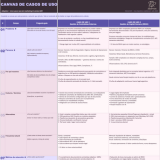
Use Case Canvas Template — Google Sheets Preview download Download the Use Case Canvas we use with our clients arrow_forward

02

Gap Analysis of acquisition channels

Where are you really starting from?

Pauli the Greyhound analyzing the channel audit across three screens

Before choosing which channels to invest in, you need an honest assessment of where you actually stand today.

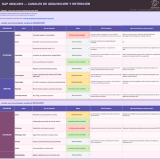
At Adoption, we call this the Gap Analysis. It's a quick, channel-by-channel evaluation that answers three questions: What are we doing today? What's missing? What would it take to do it well?

The right question is not "should we be active on LinkedIn?" The right question is "what are we communicating today on LinkedIn? What worked? What didn't? What would it take to do it better?"

Example: Paid Ads

Current stateGap (Problem)What it would take
Ran Meta campaigns 6 months ago. Generated clicks but zero conversions.No dedicated landing page. Traffic went to the homepage.Build a landing page with a specific offer and clear CTA before investing again.
No LinkedIn Ads history.Don't know if LinkedIn CPL justifies the cost for our deal size.Test with a minimum budget on a specific audience before scaling.

Example: Partnerships

Current stateGap (Problem)What it would take
Two complementary vendors we work with on shared accounts, no formal agreement.No structured referral flow or co-branded content.Define a reciprocity agreement: shared ICP criteria for referrals and one joint content piece to start.
In a US accelerator alumni network but only as participants.No positioning as a category expert within the community.Propose one talk or panel, publish one co-authored piece with the accelerator.

The channel matrix

The goal is to run an honest diagnostic across all of these channels:

Outbound Acquisition

  • · LinkedIn: Content + 1-to-1 outreach
  • · Email: Newsletter + sequences
  • · Paid Media: Lead Gen + Awareness
  • · In-person events
  • · Industry communities

Inbound Acquisition

  • · Complementary partnerships
  • · Client referrals
  • · Blog + social media leads

Retention

  • · Newsletter + follow-up
  • · Messaging (Slack, email)
  • · Client events
  • · Customer workshops

Why include retention?

Growing revenue isn't just about finding new clients. It's also about selling more to the ones you already have.

The probability of closing a sale with a new prospect is 5–20%. With an existing client, it is 60–70%. (Marketing Metrics, Paul Farris et al.)

Your existing client base is your most efficient acquisition channel. Most companies underuse it entirely.

The kinds of questions that guide the diagnosis

On partnerships: Which companies already sell to our target buyers without competing with us? Are there US system integrators, consultancies, or accelerators with relationships to the decision-makers we're trying to reach?

On paid media: Have we run US-targeted campaigns before? What channel, what results, and what was the real reason we didn't scale? Do we have tracking set up to measure cost per qualified lead?

On content and newsletter: Do we have a contact list we can send content to? Do we use a CRM or email marketing tool? Do we have the cadence and resources to produce consistent content in English?

On paid ads: Which platform makes sense for our ICP? LinkedIn for reaching mid-market and enterprise decision-makers. Google Search if there's active search intent in our category. Meta for low-cost awareness.

Execution note: the diagnosis doesn't have to be perfect. It has to be honest. It's not about finger-pointing internally. It's about having a clear starting point so you can build a plan that actually fits your situation.

GAP Analysis Template — Google Sheets Preview download Download the Acquisition Channel Gap Analysis Template arrow_forward
Part 2 · Planning
03

Prioritize your initiatives

The 90-day prioritization matrix

Juan the Service Dog presenting the 90-Day Plan to the client team

A channel map without priorities is just a wish list. Planning is choosing what to do first, and having a real reason to say no to everything else until the right moment.

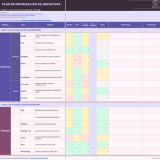
The prioritization matrix turns your channel map into an actionable plan. For each initiative identified in the Gap Analysis, you estimate three variables: execution effort, activation cost, and setup time. From that, the real priority order emerges.

ChannelInitiativeEffortCostSetupPriority
LinkedInContent + OutboundMediumMediumMedium1
Paid MediaLead Gen CampaignsMediumHighMedium2
Blog / SocialInbound contentHighMediumHigh3
EmailWeekly newsletterMediumLowMedium4
EventsIndustry conferencesHighHighHigh5
PartnershipsComplementary alliancesHighLowHigh6

The output of this exercise is a 90-day plan: the first 3 to 5 initiatives ordered by impact versus feasibility, with an owner and start date for each.

Execution note: the most common mistake is trying to activate every channel at once. The matrix gives you an objective argument for deferring what can wait. That's exactly what separates a plan that gets executed from one that gets abandoned in week 3.

Initiative Prioritization Plan Template — Google Sheets Preview download Download the Initiative Prioritization Template arrow_forward
04

Define your OKRs and how you'll measure success

Objectives and Key Results

Pauli the Greyhound monitoring the quarter's OKRs and KPIs

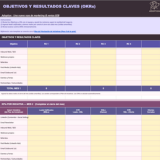
OKR stands for Objectives and Key Results. Objectives define what you want to achieve. Key Results define what you need to do to get there.

This is the most important step in planning. Not because of the OKR format itself, but because before you execute a single initiative, you need a clear answer to this question: how will we know if this is working?

Lagging vs. leading indicators

The most important distinction is between lagging indicators (results you see after the fact, like closed deals or revenue) and leading indicators (activities you can control today, like demos booked, content published, or outreach messages sent).

A company that only measures closed deals finds out it failed 90 days after the failure happened. A company that also tracks leading indicators can course-correct in real time.

The OKR structure for B2B

Objective 1: Commercial pipeline (lagging)

  • · KR1: Close X new clients in Y timeframe
  • · KR2: Generate Z qualified opportunities in active pipeline
  • · KR3: Maintain average deal size of $X

Objective 2: Channel activation (leading)

  • · KR1: Publish N pieces of content per week with measurable engagement
  • · KR2: Send X outreach messages per week with a minimum Y% reply rate
  • · KR3: Book N qualified demos per month

Objective 3: Infrastructure (enablers)

  • · KR1: CRM implemented with pipeline visible and updated weekly
  • · KR2: Content, outreach, and event playbooks documented
  • · KR3: Weekly 30-minute metrics review meeting active with a KR owner for each

How to review them

The OKR framework requires a weekly 30-minute meeting to review progress on each leading indicator. If demos booked are below target in week 3, you can adjust. If you reach the end of the quarter with zero closed deals, it's too late to fix anything.

Execution note: OKRs are easy to define in a meeting and hard to maintain without a real process. Without a weekly review, without a clear owner for each KR, and without a culture of "the numbers don't lie," they become the document nobody opens after the kickoff.

OKRs and KPIs Template — Google Sheets Preview download Download the OKRs Template arrow_forward

Ready to build your B2B growth architecture?

A B2B growth strategy has one real trap: it's easy to understand the steps and hard to execute them well without having done it before. At Adoption, we help you get started.

Free Growth Strategy session arrow_forward
Part 3 · Execution

With the diagnosis complete and the action plan defined, it's time to execute. Here's how to get started with each of the five core initiatives: Content, Ads, Outbound, Events, and Partnerships.

05

Content strategy: build authority before asking for meetings

The highest-ROI long-term channel

Tano the Great Dane designing the content strategy for the B2B client

In the US market, content is not a marketing tactic. It's a trust mechanism.

A LatAm company entering the US has no brand recognition, no reputation, and no existing relationships with buyers. Content is how you build all three, before you ever ask for a meeting. The companies that win US accounts aren't always the best product. They're the ones the buyer already knows and trusts when the need appears.

The three levels of content

1

Annual Pillars

The 3 to 5 core themes your company will be known for in your category. These don't change quarterly. They're the foundation of your authority. Example: "Compliance-ready financial infrastructure for US-based startups."

2

Monthly Narratives

The specific angle your content takes each month, anchored to a pillar. Example: "Why US CFOs don't trust LatAm fintech vendors — and how to change that perception."

3

Weekly Posts

LinkedIn posts, newsletter articles, short-form content, all serving the monthly narrative. 2 to 3 pieces per week, consistent, useful, specific enough that the right buyer says "that's exactly my problem."

Content pillars: example for a LatAm B2B Finance startup

PillarAudienceExample topics
Financial ComplianceCFOs, finance directors, legal leadsKYC/AML for US markets, compliance gaps LatAm fintechs miss, how to pass US vendor due diligence
Treasury & Payments InfrastructureCTOs, finance ops leadsCross-border payment rails, FX risk management, what enterprise US buyers look for in a payments partner
Building Trust with US BuyersFounders, sales leadsWhy US CFOs hesitate with LatAm vendors, how to build credibility fast, the role of social proof in enterprise fintech deals
Client StoriesAll decision-makersCase studies with real numbers, before/after treasury operations, specific use cases with compliance outcomes

Weekly cadence

Consistency matters more than volume. Two posts per week, every week, for six months, is worth more than a burst of ten posts followed by silence. The algorithm rewards consistency, and so do buyers. They will eventually notice when you've been showing up reliably in their feed for months.

Execution note: the content that generates authority talks about the buyer's problem, not about your product. Before publishing anything, ask: does this teach them something they didn't know? Does it help them solve a real problem? If the answer is no, don't publish it.

Want help building a content strategy that speaks to US B2B buyers?

Book a free session with a Content Strategy Expert arrow_forward
06

Social Selling: outreach that actually gets responses

The difference between warm and cold pipeline

Jose the Labrador running a consultative LinkedIn outreach sequence

Cold outreach in the US has a 1–3% reply rate on average. Warm outreach (where the prospect already knows who you are before you message them) generates 5–10x more responses with the same list.

Content should warm your lead before outreach begins. The first message isn't cold anymore. It should be a continuation of a conversation the buyer has been following for weeks.

Your LinkedIn profile as a commercial asset

Before your first outreach message lands, the prospect will check your LinkedIn profile. That profile needs to answer three questions in under 10 seconds: who do you serve, what problem do you solve, and why should they trust you?

Headline

Not your title. The problem you solve. "I help LatAm B2B SaaS companies build their first US pipeline" outperforms "Co-Founder at [Company]" every time.

About section

Written for the reader, not for you. Opens with their problem, not your biography. One specific case study with a real metric.

Recent activity

A prospect who sees consistent, useful content on your profile before receiving your message is 3–5x more likely to respond.

The 5 touchpoints outreach sequence

Touchpoint 1: Engage before connecting

Before you send anything, interact with one of their posts. Leave a comment that adds value or sparks a conversation. Ask a question. Share a relevant perspective. Reference something specific: a post they wrote, a panel they were on, a challenge in their industry. Not a pitch. Just a genuine signal that you're paying attention.

Touchpoint 2: Connection request

Send a connection request with a short note that refers to your previous interaction. Try to continue the conversation. Do not pitch.

Touchpoint 3: Message 1: Post-connection (day 1–2)

Thank them for connecting. Continue the conversation from your connection note. A genuine reason to be in each other's network. No pitch.

Touchpoint 4: Message 2: Week 2 value drop

Share one piece of value directly relevant to them. A resource, insight, or a question about something they're working on. Share a specific insight, case study, or tool relevant to a problem you know they face. Ask questions. No pitch.

Touchpoint 5: Message 3: Week 3 soft ask

If the conversation is going, try a low-friction ask: "Would it be ridiculous to discuss this briefly over a call?" The ask should flow naturally from the value already delivered.

Execution note: the seller talks about himself. The advisor asks about the client's problem. This is the reason why some sales teams get a 2% reply rate and others get 20% with the exact same contact list.

Want to build your LinkedIn outreach strategy for the US market?

Book a free session with a Lead Generation Expert arrow_forward
07

In-person events strategy

The highest-conversion channel in B2B

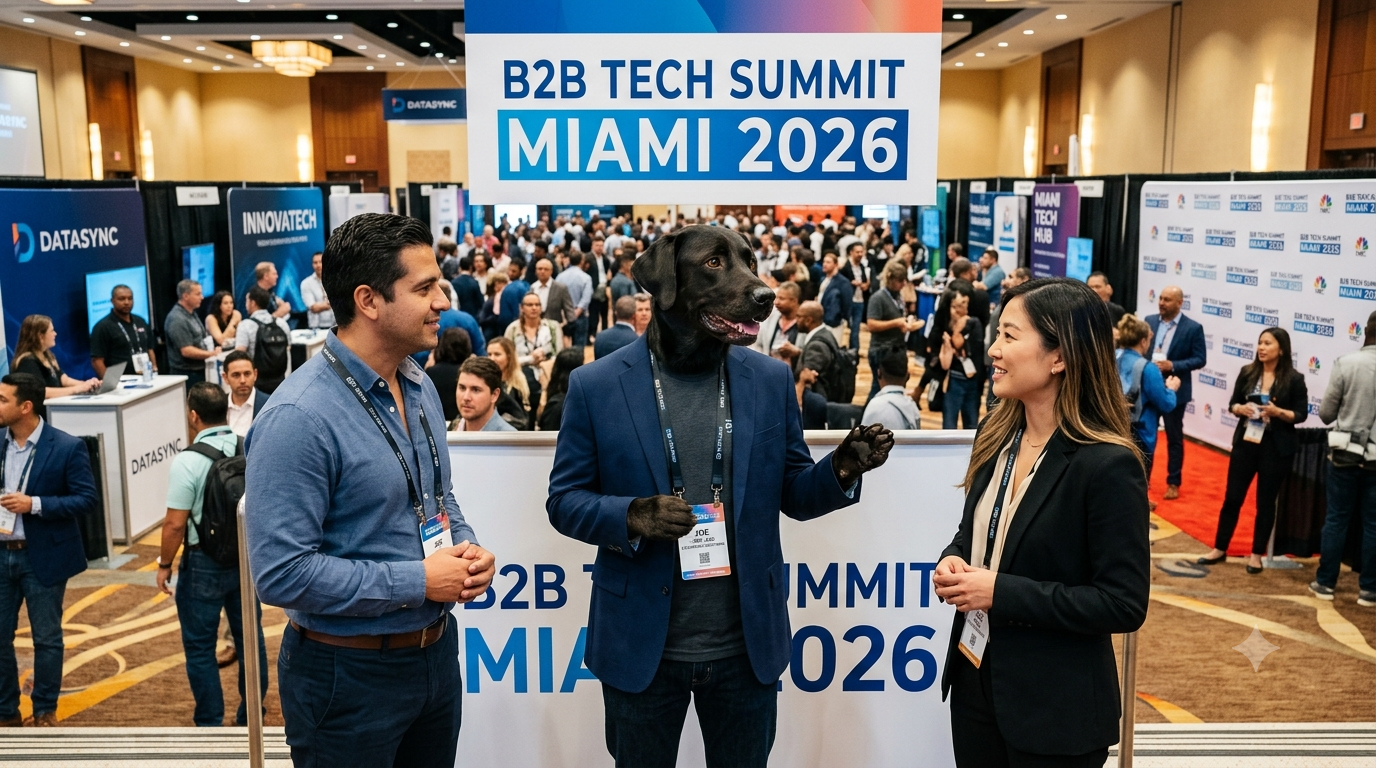
Joe the Black Lab connecting with a prospect at a B2B conference

Events are the highest-conversion channel in B2B when worked with a clear process.

An event without preparation generates business cards. An event with the right approach generates qualified conversations. The difference isn't the room. It's what you do before, during, and after.

Before the event

Map the attendee list. Identify 10 to 15 people you genuinely want to talk to. Research them the same way you would before a sales call.

Publish useful content before the event: not a post that says "so excited to be at [Event] next week." Content that works makes the event more useful for everyone: a summary of sessions worth attending, or a speaker guide filtered by topic.

If speakers are potential buyers, ask them a specific question before the event about something in their talk.

Connect on LinkedIn with your targets before arriving. Simplest message: "Saw you'll also be at [Event]. Let's connect."

During the event

The goal is not to close. The goal is to open.

The question that opens conversations: "What's the biggest bottleneck you're dealing with right now with [specific problem]?" — instead of the typical "let me tell you what we do."

If there are speakers you want to connect with, find them right after they come off stage with a specific comment about something they said. If you already asked them a question before the event, your name will already be familiar.

After the event

80% of B2B event deals are lost due to poor follow-up.

48 hours: a personalized message referencing something specific from the conversation. Not a template.

One week: a piece of value that connects to what they said they were working on.

30 days: a soft ask for a 20-minute call, as a natural continuation of the conversation.

Everything logged in the CRM from the day of the event. Without institutional memory, there's no conversion.

Execution note: most teams invest in the event and abandon the follow-up. Not because they don't want to. Because they don't have a defined process to execute it in the 48 hours after, when the conversation is still fresh and the contact still remembers who you are.

Have an upcoming event and want to build a strategy around it?

Book a free session with a Lead Generation Expert arrow_forward
08

Partnerships strategy

The highest-ROI channel long term

Tano the Great Dane closing a partnership deal with two founders

The highest-ROI channel long term. And the most ignored.

A well-activated partner is a structured referral channel: a company that talks to the same buyers you do, doesn't compete with you, and has incentives to recommend you. The difference from casual word of mouth is that there's a structured process behind it.

Types of partners

Complementary vendors

Companies that sell to the same buyers at different points in the buying cycle. If you sell people management software, a partner could be an HR consulting firm or a payroll provider. In the US context: system integrators, implementation consultancies, and VC portfolios are often the most valuable partners for LatAm companies entering the market.

US accelerators and venture networks

If you went through a LatAm accelerator with a US portfolio, those alumni networks are warm. A warm introduction from a shared accelerator carries more weight than a cold LinkedIn message — especially in the US, where trust is built before the first call, not during it.

Industry associations and communities

Access to buyer communities with built-in credibility. In the US, relevant Slack communities, trade associations, and LinkedIn groups often have more purchasing influence than a cold email campaign to the same contacts.

The activation sequence

A partner isn't activated with an email. They're activated with a model of reciprocity.

  1. Discovery: an initial conversation to understand if there's real fit between your audiences.
  2. First co-branded content: a joint article, shared talk, or webinar. Generates visibility for both parties and validates the relationship publicly before asking for referrals.
  3. First formal referral: the first client or prospect with context and a clear handoff. "Let me introduce you to [Name] — they have [X problem], and I immediately thought of you." That level of warmth is what converts.
  4. Formalization: an explicit agreement with shared ICP criteria for referrals, a tracking mechanism, and a quarterly review cadence.

The two axes of reciprocity

Performance

Mutual referrals with clear criteria (shared ICP, warm handoff, deal potential).

Authority

Co-branded content that positions both companies and generates shared visibility in the market.

The best partnerships have both axes active. One alone isn't enough to sustain the relationship long term.

Execution note: most partnerships die after the first lunch. Without an explicit agreement on what each party expects, without a concrete exchange mechanism, and without quarterly follow-up, they become good intentions with no output.

Have potential partners in mind but not sure how to structure it?

Book a free session with a B2B Partnerships Expert arrow_forward
09

Paid Media: making ads work for you

Guaranteed reach, with the fundamentals in place

Pauli the Greyhound scaling LinkedIn Ads and Google campaigns on night screens

Paid media has one advantage no other channel has: guaranteed reach. You can put your message in front of exactly the right people, without waiting for an algorithm to distribute it and without depending on a referral.

It also has a trap. It's the channel where companies burn the most money when there's no real process in place. The difference between a campaign that burns budget and one that generates real pipeline isn't the budget. It's whether you have the fundamentals in place before turning the spend on.

Fundamental 1: Value proposition and objectives

Paid media amplifies what you already have. If the value proposition isn't clear, the ad will communicate it with maximum efficiency, and that accelerates the problem instead of solving it. If you completed the Use Case Canvas in Step 1, you have this covered. The marketing objective also has to be explicit: what do you want the prospect to do after seeing the ad?

Fundamental 2: Ideal Customer Profile and targeting

Start by defining your Ideal Customer Profile and buyer personas clearly. Platforms then use your conversion data, customer lists, site visitors, and the ad content itself to identify the people most likely to convert. On platforms like LinkedIn and Meta, the creative, the message, and the landing page are part of that signal — they help the algorithm understand what kind of user should see the ad. A well-defined ICP from Step 1 gives you the foundation to build that strategy.

Fundamental 3: Performance or Awareness

Performance: the objective is a specific action. Measured in cost per lead. The right choice when your audience already has awareness of the problem and is evaluating options.

Awareness: the objective is for the right people to know your company before they have an active need. Measured in reach and engagement. For a company just entering the US market: always start with Performance.

Fundamental 4: Platforms

LinkedIn Ads: the most precise B2B targeting available. Higher CPL than Meta, but more qualified leads. Ideal for decision-makers at mid-market and enterprise companies. Recommended format: Lead Gen Forms.

Google Search: captures active intent. When someone searches for your solution category, your ad appears at the moment the problem is already active in their mind.

Meta Ads: massive reach at lower cost. Useful for awareness and retargeting. Best used as a second touch rather than a first contact in B2B.

Fundamental 5: Creative

The creative is far more than a visual asset. It's the primary vehicle for capturing attention, communicating value, and helping the platform find the right people. A strong ad combines three elements:

  • Hook: in the first few seconds, speak directly to your Ideal Customer or to a problem they recognize as their own.
  • Value: explain clearly what they gain by solving that problem, and why now.
  • Clear CTA: ask for one action only. The simpler, the better. "Book a demo" or "Download the guide."

The 3 phases of budget

1

Set up tracking

Before spending a dollar, tracking has to work. Pixel installed. Conversions defined.

2

Test with intent

The goal of the first weeks is to learn what works, not to scale. Recommended budget: 2× the value of one new client.

3

Scale what works

When an ad converts at a cost that leaves margin, the only goal is to scale it.

Execution note: most companies abandon paid media in Phase 2 because they see the loss but not the learning. The mistake isn't losing money in tests. The mistake is not having a method to identify when an ad has won, and not scaling at that moment.

Want to know if paid media makes sense for your company right now?

Book a free session with a Paid Media Expert arrow_forward
The 3 Service Dogs and the founder celebrating results with a full pipeline
THE CONCLUSION

The honest math

A well-executed GTM for a LatAm B2B software or services company entering the US, with a clear value proposition, consistent content, and consultative outreach, produces qualified conversations in 90 days.

These conversations are qualified because buyers already know the problem you solve. Either they read about it in your content, or they came through someone who introduced you with context. Not cold meetings. Warm ones.

The question isn't whether you need a real commercial strategy. It's when you want to commit to it.

Book 30 minutes with our team arrow_forward

ADOPT WHAT WORKS.

Get B2B marketing and sales best practices every week. No spam.

rocket_launch

We'll audit your sales strategy (at no cost)

Not a sales call. A real 1:1 working session to review your GTM strategy.

Choose your block: 15, 30, or 60-minute sessions.

The first one is on us: if we see where we can genuinely help you close more, we'll talk about working together. If not, you walk away with a clear diagnostic of what to fix on your own.

Book your session arrow_forward